You do not remove a task. You move the real work.
Why an AI project does not merely remove tasks: it moves workload, exceptions, judgment, responsibility, and sometimes the meaning of work.
What three field cases reveal about AI, automation, and working conditions.
A company replaces the assistants of its executives with AI agents. On paper, the idea is simple: automate administrative tasks to free up time. Less coordination, fewer follow-ups, fewer small repetitive operations. Executives will be able to focus on what really matters.
A few weeks later, the company calls an ergonomics firm. The problem: the executives are overloaded.
This is not an anti-AI anecdote. It is more interesting than that. The AI did not necessarily “fail.” It probably did part of what it was asked to do. The problem was elsewhere: the company thought it knew what it was automating.
It thought it was removing administrative tasks. It had moved the real work.
Job descriptions lie by omission
In many AI projects, organizations start from a poor representation of work. They look at a job description, an org chart, a process, a sequence of tasks in a tool. They ask: “What is repetitive? What takes time? What can we automate?”
That question sounds rational. It is often too short.
In ergonomics, we distinguish prescribed work from real work. Prescribed work is what is planned: the procedure, the job description, the nominal flow, the story we tell when everything goes well. Real work is what people must do to keep things holding together when everything does not go well: incidents, exceptions, trade-offs, arrangements, micro-decisions, messages that must be reformulated, priorities that must be reordered, tensions absorbed before they become visible.
Prescribed work is easy to describe. Real work is easy to miss. And AI first automates what you were able to describe, not necessarily what people actually do.
The project-solution trap
This is a classic organizational bias: arriving with the solution before understanding the problem. We want to install an exoskeleton before observing the gestures. We want to robotize a line before understanding what operators regulate. Today, we want to add AI before looking at the work.
Marketing pushes in that direction: if you do not move, you will fall behind. If you do not integrate AI, you will be left behind. If you do not find use cases, your competitors will. So we look for tasks. We slice up work. We automate what looks simple. Then we discover that what looked simple was sometimes what regulated everything else.
In the assistant case, the visible part could be replaced: calendars, messages, follow-ups, documents, small coordination operations. But an assistant does not merely do “administrative tasks.” She filters, anticipates, prioritizes, detects weak signals, knows people’s habits, absorbs friction between people, and prevents minor topics from becoming problems for executives.
When that layer disappears, the work does not disappear. It moves upward. And the people who recover it do not always have the time, attention, or room for maneuver to absorb it.
When you remove the simple, what remains is not necessarily noble
There is a frequent promise in automation projects: remove low-value tasks so humans can focus on more interesting work. Sometimes this is true. But another trajectory exists: you remove the simple, and humans are left with exceptions.
A production line makes this very clear. Imagine five workstations. A part moves from station to station. Operators regulate constantly: a part arrives slightly late, a colleague is missing, a detail does not match the nominal case, something must be adjusted.
Then the middle station is robotized, because it carries the simplest tasks, therefore the most robotizable ones. On paper: less strain, more productivity, fewer repetitive operations. On the ground: the robot station does not negotiate with reality. It waits for what arrives to match what was planned. It does not arrange. It does not compensate. It does not see that the team is short-staffed, that the previous part was delayed, or that the flow must be reordered to hold.
Before, operators regulated across five stations. After, they must feed a clean flow into a more rigid system. The regulation margin shrinks. Variability concentrates. The people placed around the machine often need to be more expert, not less. And those experts are sometimes employees later in their careers, already carrying physical vulnerabilities, who end up receiving the most difficult situations.
What was supposed to simplify work can intensify it. What was supposed to reduce strain can concentrate it.
The mechanism applies to office work too. If AI takes the nominal, the human recovers the ambiguous. If it takes the easy part, the human recovers what breaks. If it takes visible production, the human recovers verification, correction, arbitration, and responsibility.
That is not always bad. But it is never neutral.
Supervising AI is not doing nothing
We often underestimate the workload of supervision. In software development, for example, AI is already transforming part of the work. The developer no longer only writes code. They describe an expected behavior, wait for a proposal, read it, verify it, correct it, prompt again, compare, and recover.
That can be very powerful. But it is not the same activity.
Producing and supervising do not mobilize the same resources. Writing part of the work yourself and monitoring a system that can produce a plausible error are two different cognitive experiences. We already know this problem from control rooms and process-control activities. Being alerted when intervention is needed is not the same as having to maintain attention continuously in order to detect the anomaly yourself.
In one case, the system signals the gap. In the other, you must stay vigilant enough to notice that something is wrong.
With AI, the problem is even subtler: the error can look correct. A legal text can appear clean while citing irrelevant rules. A consulting deliverable can look serious while being hollow. An answer can be fluent, convincing, well structured, and still insufficient.
Value does not disappear. It moves toward judgment. And judgment requires craft.
Automating the wrong half of the work
Perhaps the clearest case is a foundry. Operators handle rough-cast brake parts in a difficult environment: heat in summer, cold in winter, sand, noise, protective equipment, heavy parts, short cycles.
Their work is not only to carry or rework parts. They inspect. In a few seconds, they detect very fine defects on irregular, black, raw parts, and judge whether the defect is acceptable or dangerous. From a distance, management mostly sees physical strain.
The project then consists in automating defect detection, so operators only have to do the rework: chipping hammer, grinder, all day long. But for the operators, the interesting part of the job was not the rework. It was the inspection.
The project removed judgment and left strain. It automated the part that gave meaning, then kept the hardest part for humans. We could have imagined the reverse: automate part of the rework and preserve human inspection. Or at least start from real activity before deciding what to automate.
The field study eventually showed that the project was going in the wrong direction. This is the question every AI project should ask earlier:
Which half of the work are we automating?
The visible half? The strenuous half? The half that gives meaning? The half that allows others to work?
These questions change everything.
AI can also reveal the depth of work
None of this means AI necessarily degrades working conditions. That would be as false as saying it necessarily improves them.
AI can free up time. It can speed up data processing. It can allow a small team to do work that previously required far more resources. It can help a professional be more present in an interview because they are no longer entirely absorbed by note-taking. It can surface uses no steering committee would have imagined.
But these positive effects rarely appear when a solution is pasted onto a job description. They appear when we start from the field.
Generative AI has an interesting characteristic: it is malleable. Give the same tool to two people who theoretically have the same job, and you will probably see two different uses emerge. Each person adjusts it to their activity, constraints, and ways of working.
That can become a strength if the organization creates a frame: training, usage feedback, collective discussion, capturing and reusing practices, control of what works and what degrades work. The problem is not “AI or no AI.” The problem is: who observes work before deciding? Who discusses usage after deployment? Who looks at real effects on workload, meaning, quality, cooperation, and health?
AI can even reveal the depth of certain jobs. When it fails to replace an activity that looked simple, it sometimes shows that the activity was not simple at all. It makes visible what had become invisible: embodied expertise, discreet arrangements, quick decisions, forms of care given to other people’s work.
This may be one of the most interesting effects of this period: automation forces organizations to rediscover what they no longer knew how to see.
Before automating, ask three questions
The question is not: “What can AI do?” That question comes too early. The first question should be: “What does the work really do?”
Before automating a task, ask at least these three questions.
1. What part of this task does not appear in the job description?
If you can only describe the nominal case, you risk automating a caricature of the work.
2. Who will recover the exceptions, errors, and ambiguous cases?
If the answer is “the teams will figure it out,” you are probably moving workload without organizing it.
3. What room, recovery, or meaning did this task give to the job?
Some simple tasks are not merely wastes of time. They can be moments of recovery, coordination, understanding, or part of what makes the job interesting.
These questions do not slow innovation. They prevent us from confusing speed with haste.
The real test of an AI project
A successful AI project is not measured only by what the machine can do. It is measured by what work becomes after the machine arrives.
Does workload truly decrease, or only change shape? Do errors become more visible, or more plausible? Do people gain power to act, or become responsible for monitoring a system they do not control?
Do we remove strain, or only meaning? Does the organization learn from the field, or force the field to adapt to the solution?
AI does not magically remove work. It recomposes it. It can move workload, exceptions, judgment, responsibility, value, and sometimes strain.
So before asking what you can automate, ask what you might move.
If you have an AI project underway, start there. I prepared a 12-question grid to identify, before deployment, where real work may shift.
To get it, email me: Get the 12-question grid.
For the broader frame, start from julientalbot.com/en.
Julien Talbot - Ergonomia
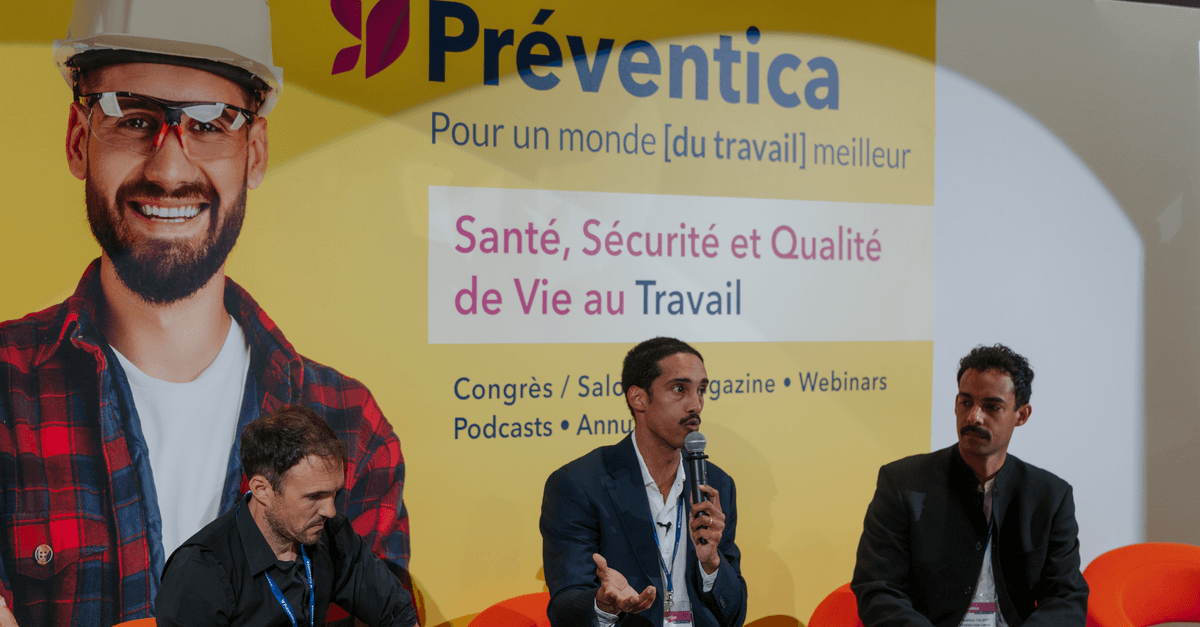
Article based on the talk “What impact does AI have on working conditions?”, co-hosted with Alexandre Normand and Matthieu Talbot at Préventica Rennes, June 2026, for CINOV Ergonomie.